PhD Student · Researcher · Volunteer
David GabrielSchauer
B.Sc. ETH in Interdisciplinary Sciences
PhD Student in Chemical Engineering · Columbia University, Gang Lab
Research Trajectory · ETH Zurich · Brown University · Brookhaven National Laboratory
I work on plasmonic gold nanoparticles and their surface-sensitive interrogation through optical and X-ray spectroscopy. My path traces an unconventional arc — from a mechatronics apprenticeship in Austria to interdisciplinary natural sciences at ETH Zurich, beamline work at Brookhaven, and graduate studies at Columbia. Outside the lab, I serve as US ambassador for Malaika Kitchens, a food-security initiative in rural Kenya.
 dgs2153@columbia.edu

 dschauer@bnl.gov


HoverTap — meet my AI twin · tap again to flip back
01 · Research & Academic Trajectory
Plasmonic Nanostructures &
X-ray Spectroscopy
Tunable synthesis, surface functionalization, and optical / X-ray spectroscopic interrogation of plasmon resonance in (an)isotropic gold nanoparticles — across ETH Zurich, Brown, Brookhaven, and now Columbia.
Columbia University · Gang Lab
Fully-Funded PhD Student, Gang Lab, Department of Chemical Engineering, Fu Foundation School of Engineering and Applied Science, Columbia University in the City of New York. Programmable nanomaterial assembly with Prof. Oleg Gang.
Fully-Funded PhD StudentETH Zurich · ATTO Lab, LPC
Honorary PhD Student, ATTO Lab, Laboratory of Physical Chemistry, Department of Chemistry and Applied Biosciences, Swiss Federal Institute of Technology (ETH) Zürich. Scientific staff 2022–2025 in Prof. Hans Jakob Wörner's lab: led the wet-chemistry laboratory; developed pH-driven seed-mediated synthesis for precise tuning of plasmon response in gold nanoparticles.
Honorary PhD StudentHitachi Energy · CERC
Intern, Semiconductor power-module packaging and reliability engineering, Central European Research Center, Baden-Dättwil. Reliability testing of encapsulated power modules for SiC-MOSFET semiconductors using scanning acoustic microscopy, surface profilometry, and accelerated stress testing.
R&D InternBrown University · Klein Lab
Visiting Scholar, Klein Lab, Department of Chemistry, Brown University. Helped build out the chemistry & spectroscopy laboratory with Prof. Emily Sprague-Klein; plasmonic nanoparticle synthesis and surface-sensitive spectroscopy.
Visiting ScholarBrookhaven National Lab · CFN Soft & Bio Nanomaterials
Guest Junior Research Associate, Soft and Bio Nanomaterials Group, Center for Functional Nanomaterials (CFN), Brookhaven National Laboratory (BNL), U.S. Department of Energy (DOE). Self-assembled DNA-origami nanomaterials and their structural characterization.
Guest Junior Research AssociatePaul Scherrer Institute · SwissFEL Maloja
Guest User on X-ray pump/probe of vortex electron scattering in 3-pyrrolidinol. Vacuum chamber, manipulator, and liquid delivery system assembly.
BeamtimeTeaching · Columbia ChemE
TA for Analysis of Chemical Engineering Problems (CHENE3020, Prof. Urban) and Principles of Chemical Engineering Thermodynamics (CHENE3010, Prof. Simunovic).
Teaching AssistantAustria → Switzerland → United States
Mechatronics apprenticeship in Linz · Benedictine Abbey High School, Melk · B.Sc. Interdisciplinary Natural Sciences at ETH Zurich · MS/PhD Chemical Engineering at Columbia.
Education02 · Publications & Talks
Peer-Reviewed Work &
Conference Presentations
Three peer-reviewed publications and presentations at APS, Gordon Research Conferences, ICORS, NSLS-II, and Nanotech France. Full list on Google Scholar.
Targeted Synthesis of Gold Nanorods and Characterization of their Tailored Surface Properties using Optical and X-ray Spectroscopy
Physical Chemistry Chemical Physics (RSC) · 2024 · 26(39), 25581–25589 · PCCP 2023 Emerging Investigators
Plasmon Resonance Dynamics and Enhancement Effects in tris(2,2′-bipyridine)ruthenium(II) Gold Nanosphere Oligomers
Nanoscale (RSC) · 2024 · 16(11), 5601–5612 · Nanoscale 2024 Emerging Investigators
Failure Evolution and Reliability Assessment of Epoxy Mold Compounds in Power Module Encapsulation
PCIM Conference · Nuremberg · May 2025 · pp. 1209–1216
Plasmon Resonance Dynamics of Surface-Modified Gold Nanoparticles Explored Through Optical and X-ray Spectroscopy
Anaheim, CA · 2025
Posters & Abstracts · 2022 — 2025
03 · Engagement & Service
Malaika Kitchens &
Volunteer Work
Outside the lab — service through food security in Kenya, music education in Switzerland, and student leadership at ETH. The work connecting science training to the world beyond it.
Malaika Kitchens
US Ambassador for a grassroots initiative working on health, education, and community in rural Kenya. Responsible for outreach and funding acquisition in the United States.
Active · Get Involved →Melody Factory
Ambassador for a Swiss foundation supporting youth and music education. Responsible for communication, outreach, and funding acquisition.
Foundation WorkAssociation of Chemistry Students at ETH (VCS)
Held three board positions: Vice President, Head of Industrial Relations, and Transcript Writer. Connected the student body with industry partners and supported academic life across the department.
Student LeadershipAustrian Red Cross · Civil Service
Completed national civil service. Board examination as paramedic and emergency vehicle driver.
Civil Service04 · Affiliations
Professional &
Civic Membership
Active membership in a handful of professional and university clubs in New York City — a useful framework for fellowship, alumni connection, and civic life across institutions.
Rotary Club of New York #6
Member in good standing. International service organization founded in 1909.
MemberPenn Club of New York
Member in good standing.
MemberColumbia University Club of New York
Member in good standing through Columbia affiliation.
MemberBrown University Club of New York
Member in good standing through Brown affiliation.
MemberBelvoir Rowing Club Zurich
Active rower. Other interests include soccer, skiing & ski touring, tennis, weightlifting; piano and ukulele; ancient philosophy.
AthleticTool · Live
HELIX
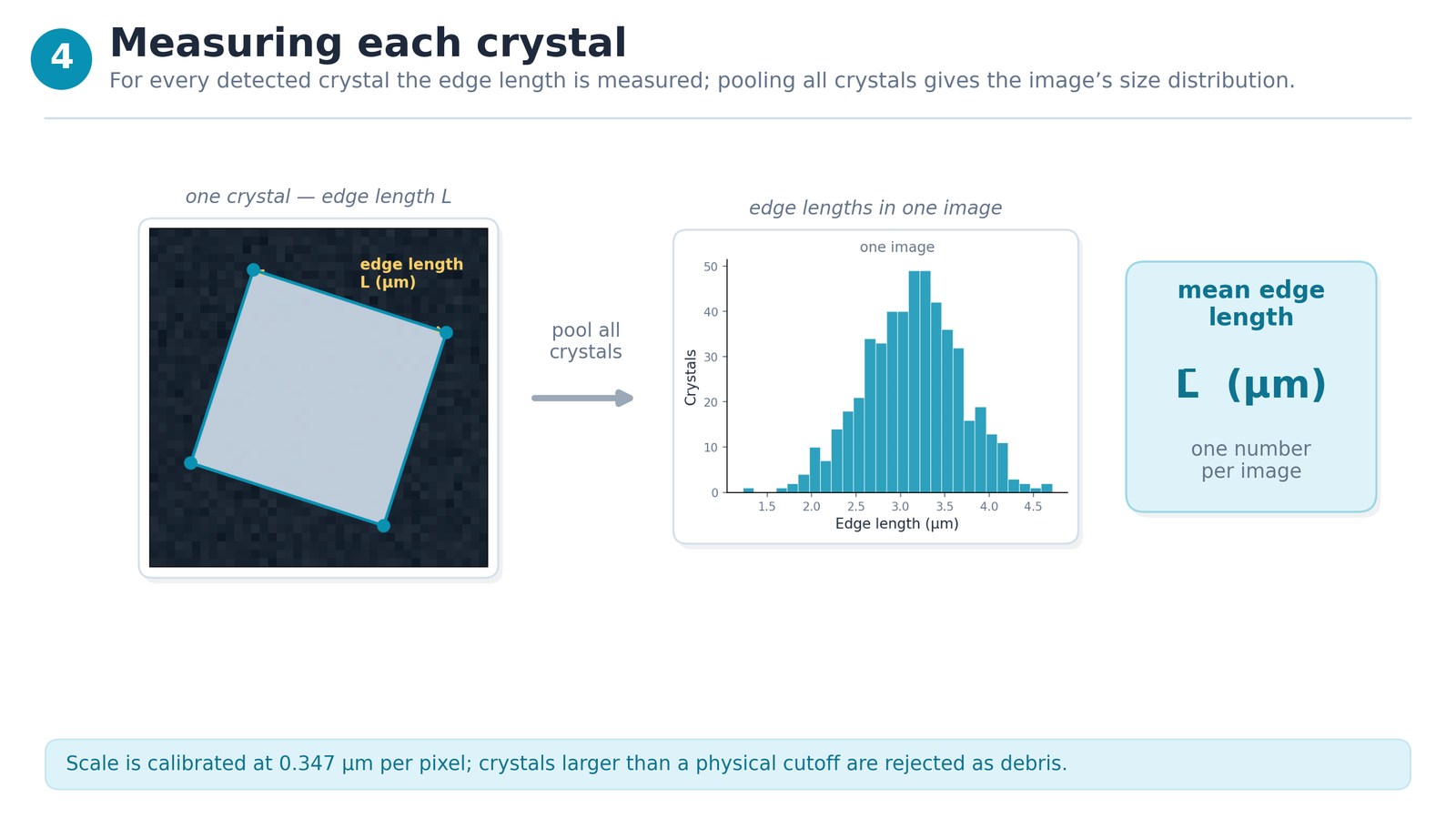
High-throughput Edge-length and Lattice Imaging eXplorer
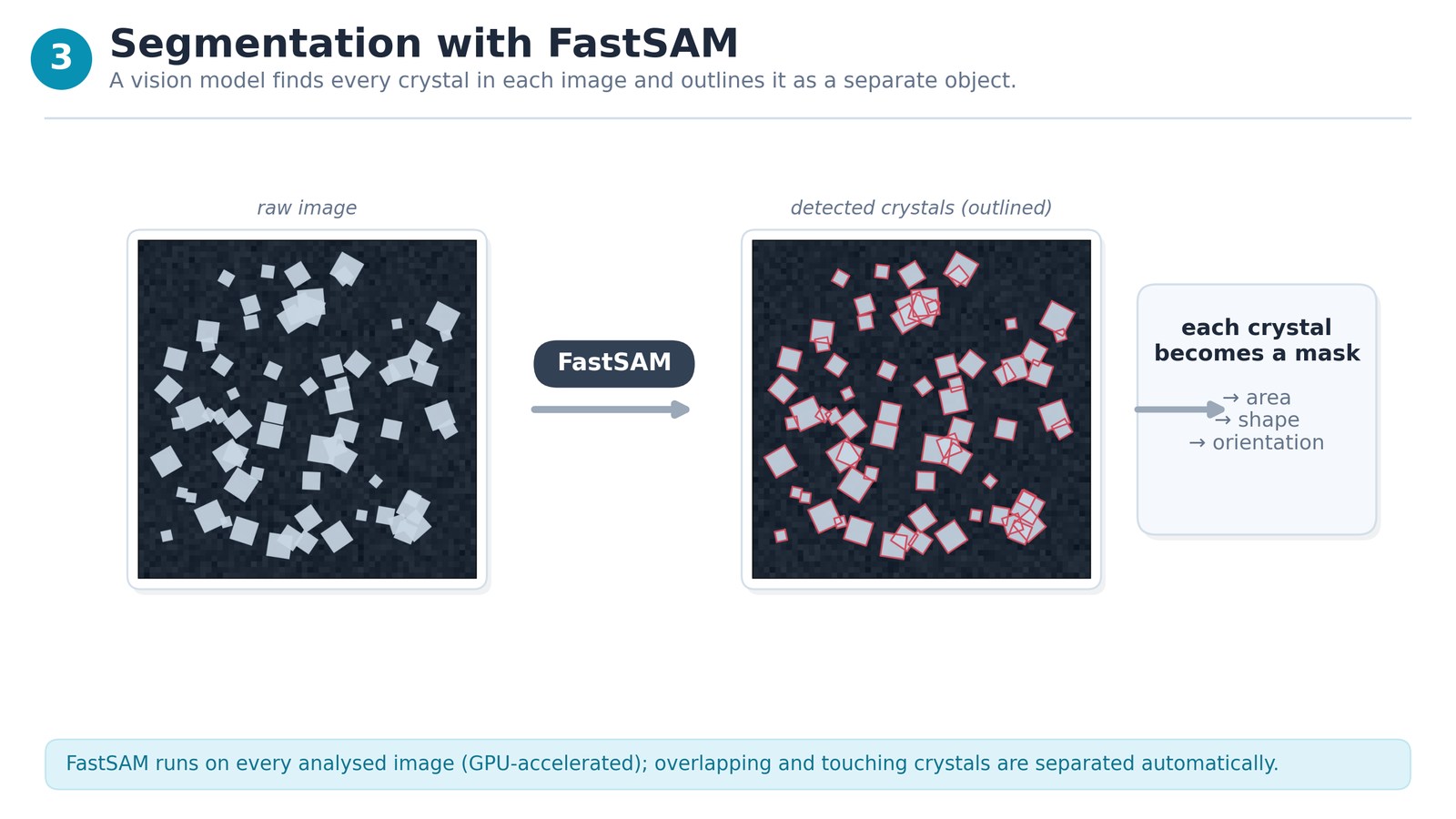
Crystal-Tools v8 · From 11,160 optical-microscopy images to one melting temperature per well — segmented, measured and fitted automatically. CFN Automated Image Analysis. Original tool © 2026 D. G. Schauer · crystal segmentation builds on SAM (Kirillov et al., Meta AI) & FastSAM (Zhao et al., CASIA) — with thanks to their developers.
Explore results opens the interactive HELIX
results browser: click the plate, open melting curves, Boltzmann Tm fits
and crystal-size distributions, compare wells and download CSVs — or upload your own
run's results/ folder. It needs no GPU.
Launch HELIX — the full GPU segmentation run —
stays local for now; the walkthrough below shows exactly what it does.

Image analysis
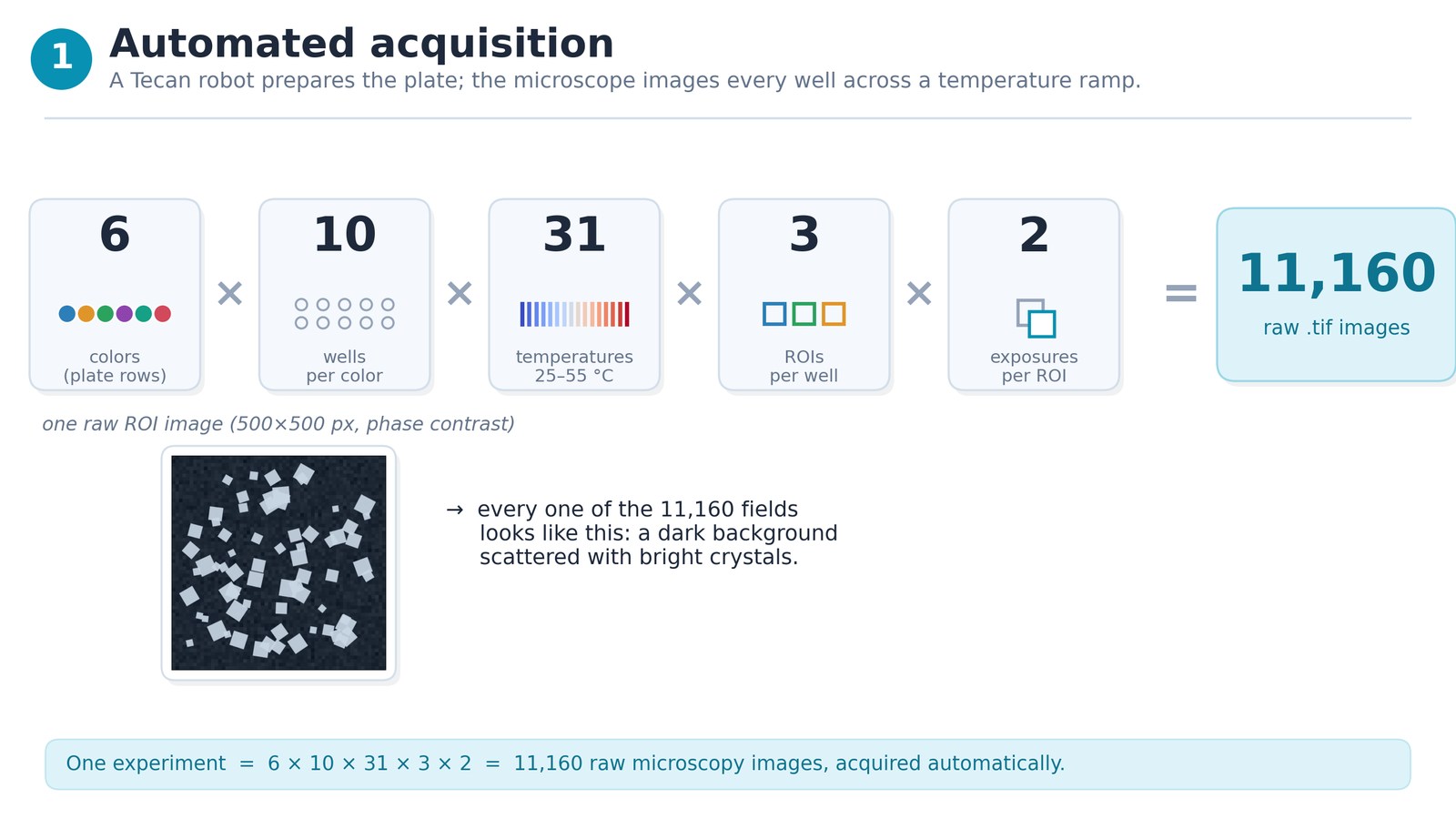
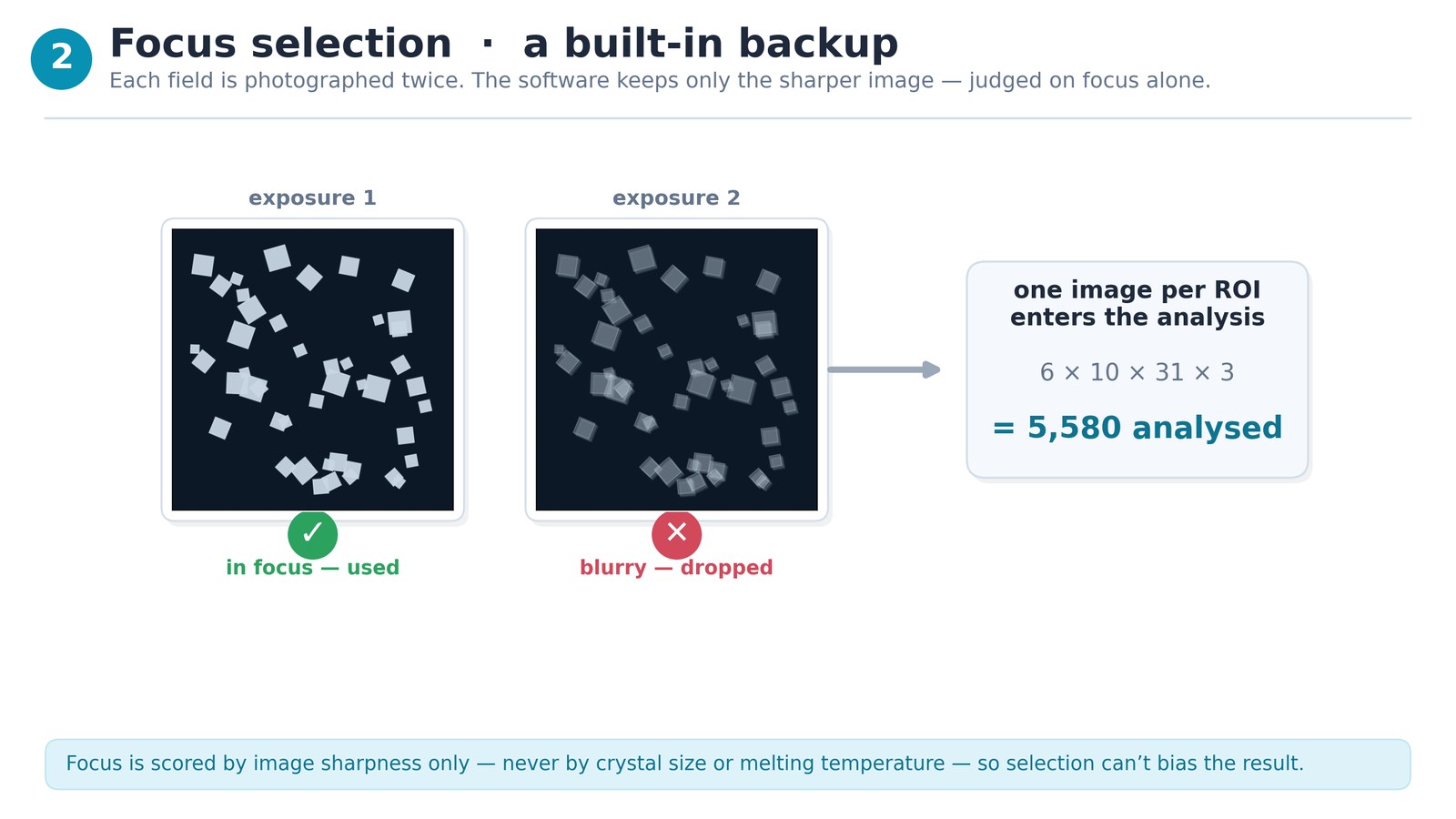
Every raw field is focus-selected, segmented crystal-by-crystal, and measured.
Aggregation & melting temperature
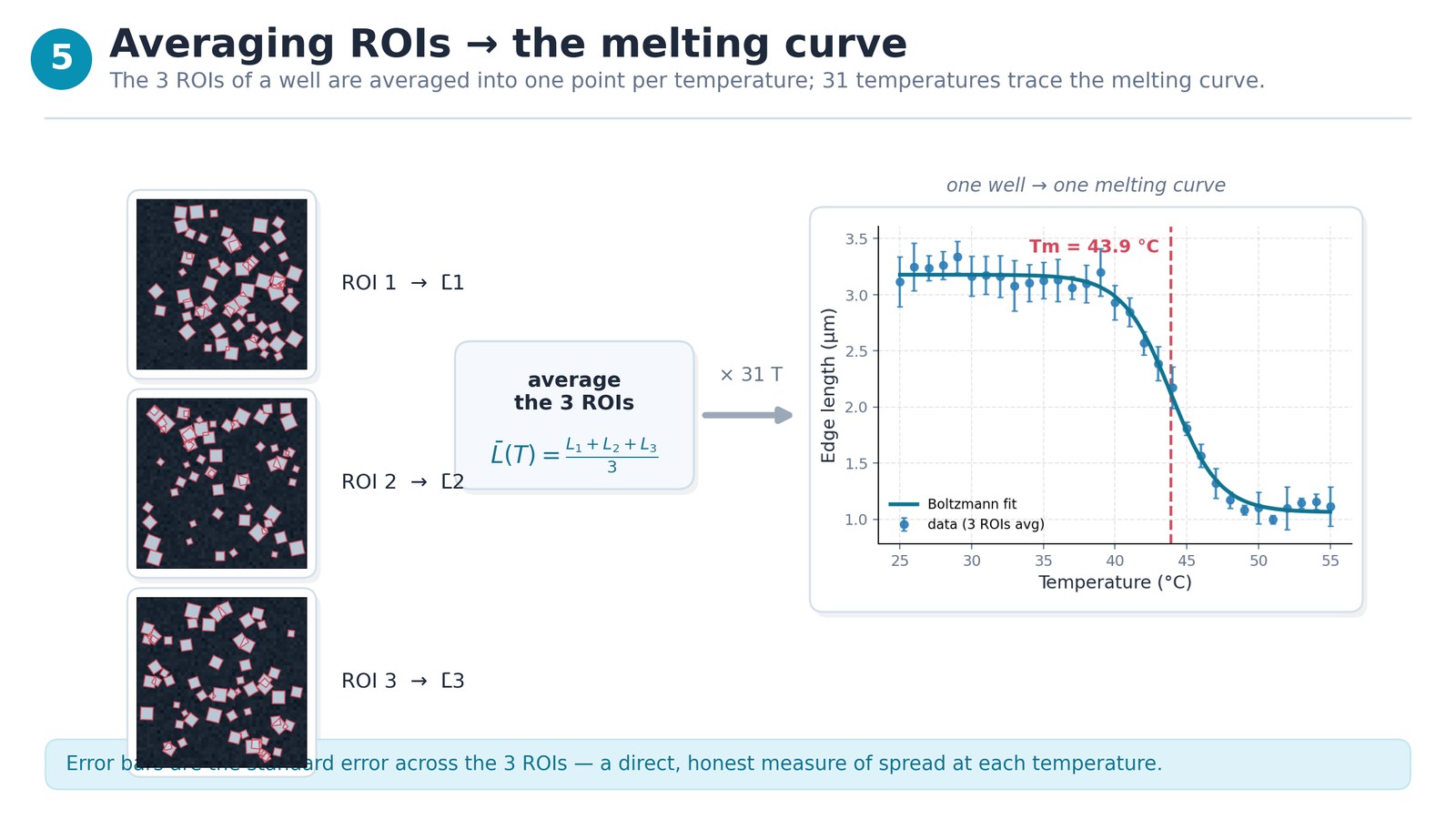
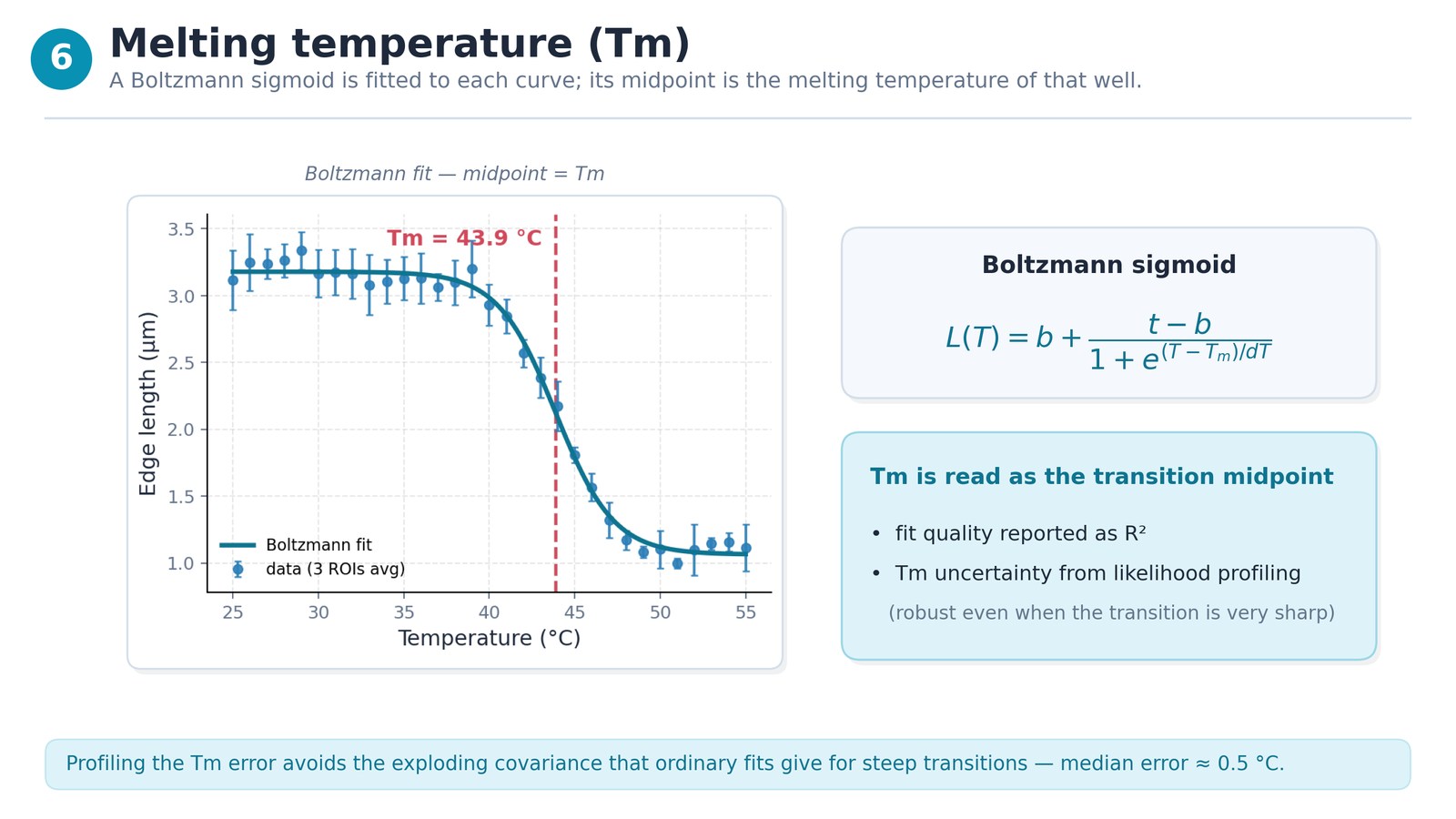
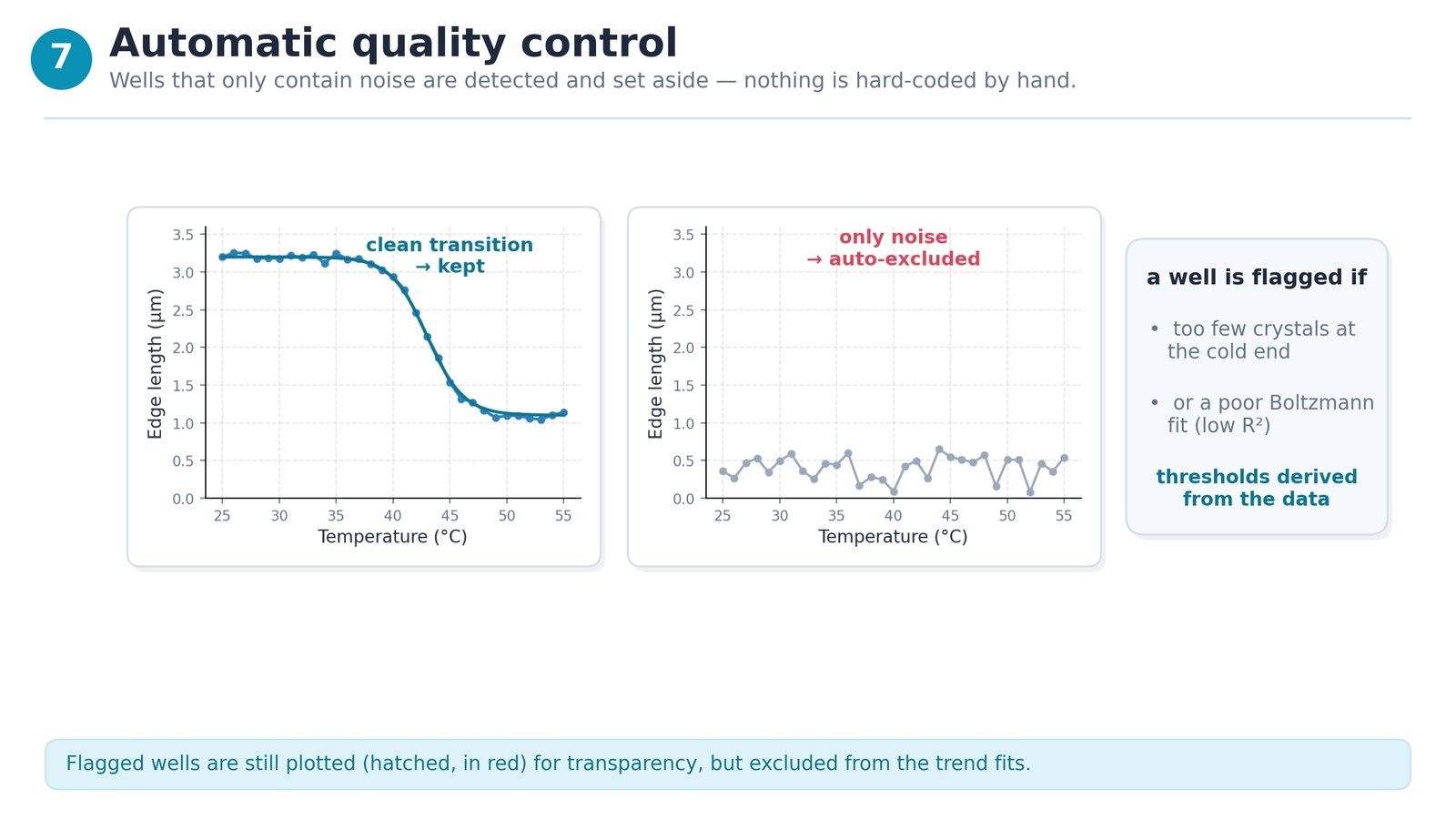
The three ROIs collapse into one melting curve per well; a Boltzmann fit gives Tm, and empty wells are caught automatically.
Population analysis
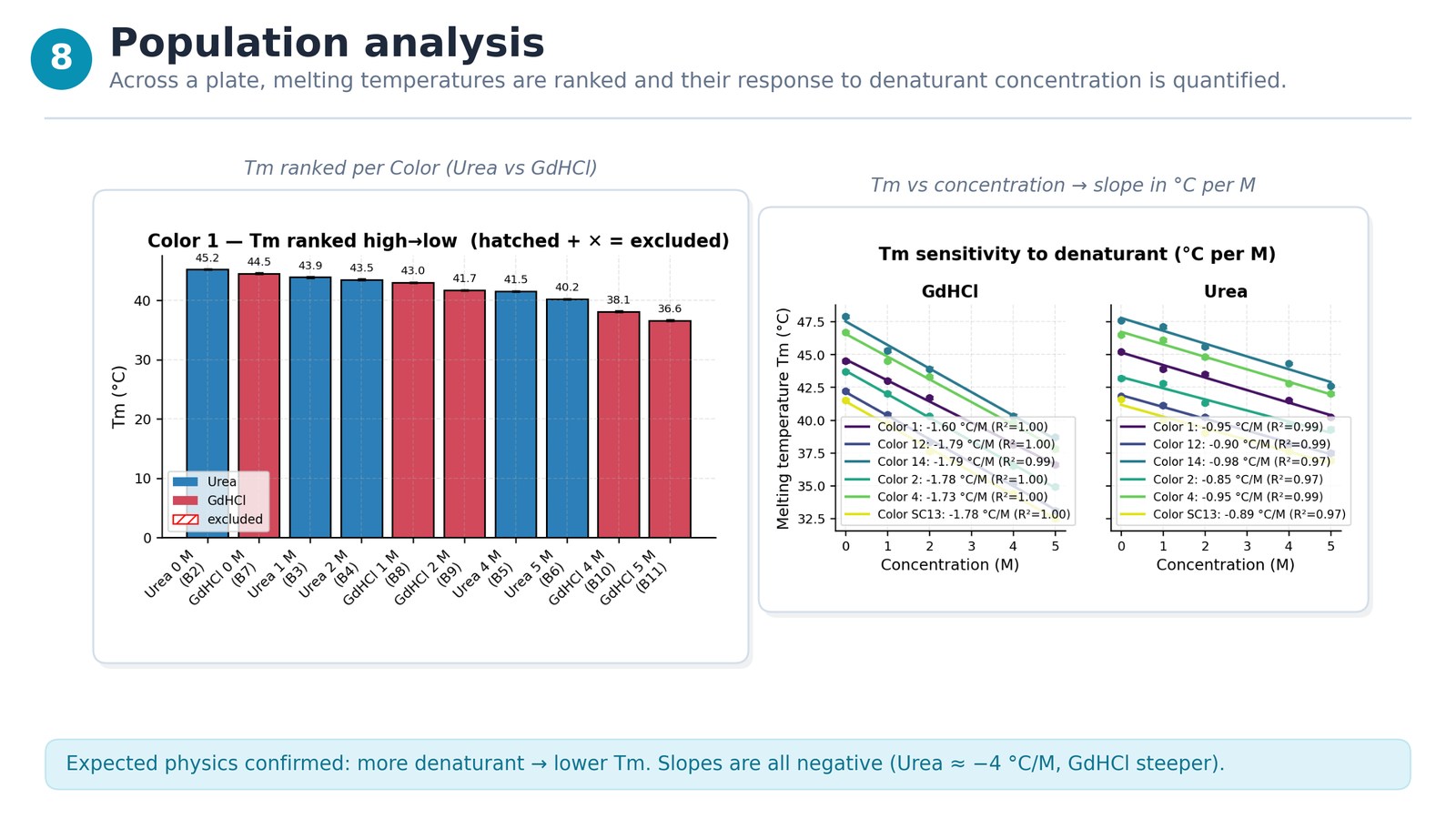
Across the plate, melting points are ranked and their response to denaturant concentration is quantified in °C per molar.
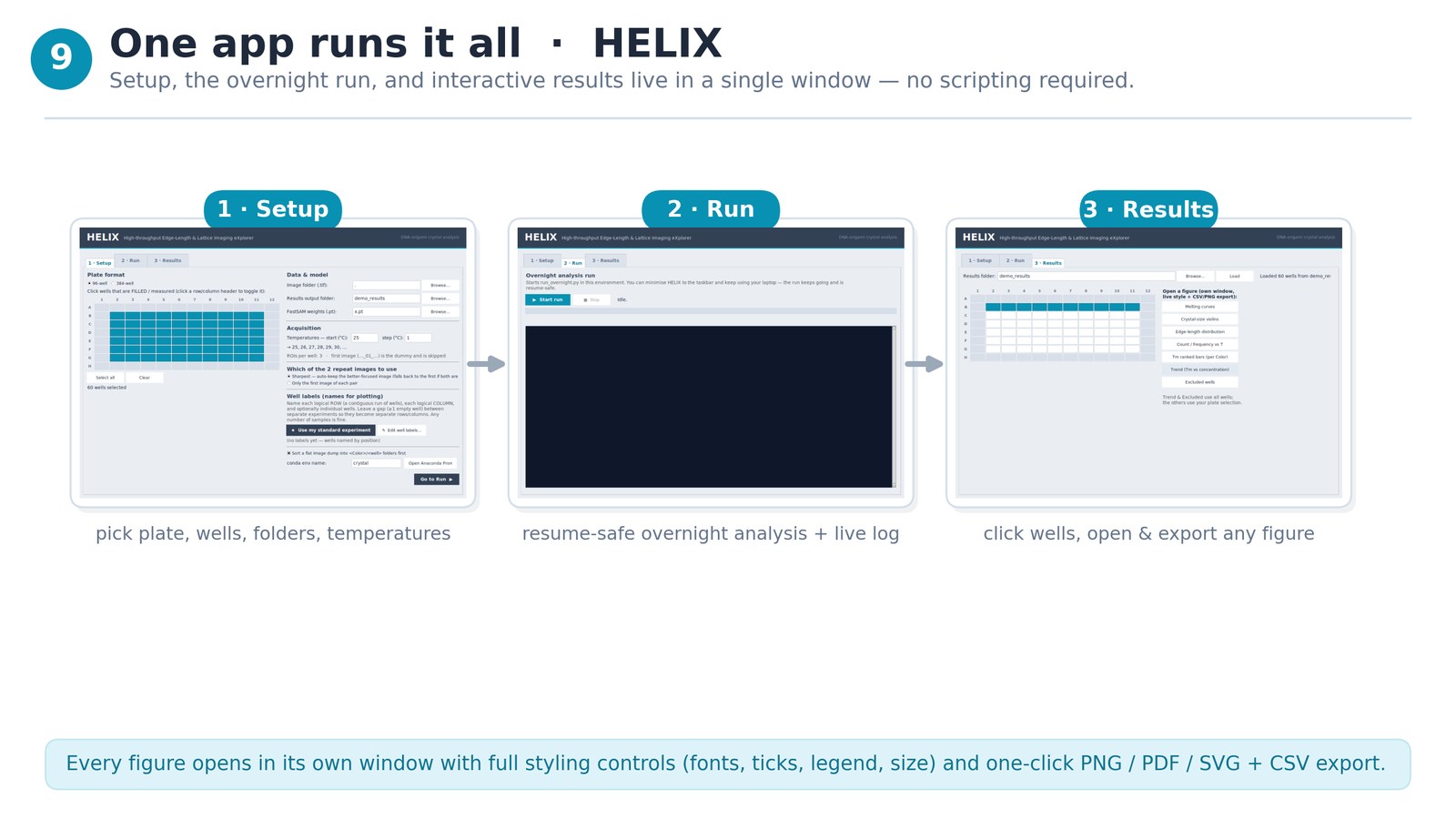
One app runs it all
Setup → Run → Results in a single window — resume-safe overnight analysis, and every figure styleable and exportable (PNG / PDF / SVG + CSV).
6 colors × 10 wells × 31 temperatures (25–55 °C) × 3 ROIs × 2 exposures = 11,160 .tif · 3 ROIs averaged → 31 points per well → Boltzmann melting curve → Tm
Tool · Live
OWL
Overleaf · Word · LaTeX
Written your paper in Overleaf but your advisor needs Word? Upload the
LaTeX sources, download an editable .docx
— fonts, figures, equations and ACS citations carried across, bundled
with your PDF and sources.
Original tool © 2026 D. G. Schauer · powered by the
open-source pandoc &
python-docx
— with thanks to their developers.
The OWL converter runs as its own small web app. Click below to open it,
enter the access password, upload your Overleaf source
.zip (and optionally the compiled
PDF), and download a bundle with the Word file, PDF, .bib
and all figures.
An editable Word document — plus your sources
One upload in, one .zip out.
Times New Roman, justified, title page, running header, Arabic body /
Roman appendix numbering, real Word equations, and clickable
ACS citations built straight from your .bib — ready for your
advisor to edit or comment on.
The download is a single .zip holding the Word file,
your compiled PDF (if you upload it), the references.bib, and
all figures — so the whole paper travels together in one place.
Three steps, a few seconds
Download from Overleaf
Menu → Download → Source (a .zip with your .tex, .bib and figures). Grab the PDF too if you want it in the bundle.
Upload it to OWL
Drop the .zip in — OWL finds the main .tex and its bibliography automatically.
Download the bundle
Get back a .zip with the Word file, PDF, .bib and figures. Hand it to your advisor. Done.
Citations to edit?
Easiest is to have your advisor flag adds / removes in Word comments — you handle them in Overleaf and re-run OWL.
Built on pandoc + python-docx · no LaTeX install needed · runs free on Streamlit Cloud / Hugging Face Spaces
Tool · Live
SCAFFOLD
ScatterSim Computational Analysis Framework For Origami Lattice Design
Upload your reduced 1-D SAXS curves (CMS
Cir_Avg…csv or ESRF
.dat) and get, per curve:
the form-factor fit, the structure factor
S(q) = I/Pfit,
peak detection, cubic (SC/BCC/FCC) indexing with (hkl) labels, and
full-resolution ScatterSim crystal fits.
Original tool © 2026 D. G. Schauer · simulation engine:
ScatterSim
by K. G. Yager et al. (Brookhaven National Laboratory) —
Yager
et al., J. Appl. Cryst. 47, 118–129 (2014) — with thanks to its developers.
SCAFFOLD runs as its own small web app. Click below to open it, pick
your geometry (octahedron / cube / tetrahedron) and fill state,
upload one or many curves, and step through Overview → Data →
Measurement → Analysis → Modelling. Downloads: publication-ready
S(q) figures (PNG/PDF/SVG),
peak->(hkl) mapping tables, and a batch results spreadsheet.
From a raw curve to an indexed structure factor
The physics is the lab's ScatterSim library (K. Yager, CFN) — bundled and untouched.
Fit scale·P(q) to the data and divide it out —
S(q) = I / Pfit — with the Bragg peaks
rising above the fit. AuNP sphere for filled sites, origami
wireframe for empty. Optional buffer-blank / power-law background.
Automatic SC / BCC / FCC indexing with per-peak (hkl)
labels and a lattice constant a, plus a
full-resolution ScatterSim crystal fit. Drop many files in
for batch mode with a master spreadsheet.
Five steps, one browser tab
Pick your sample
Choose the origami geometry and fill state (empty / half / fully-filled), and the gold size for filled systems.
Upload your curves
One or many reduced 1-D curves — Cir_Avg…csv or ESRF .dat. The loader auto-detects the format.
Fit & index
The form factor is fit and divided out, peaks detected, and the cubic lattice indexed with (hkl) labels and a lattice constant.
Download
Publication figures (PNG/PDF/SVG), the peak→(hkl) mapping and a text summary — or a batch results .zip.
Built on the lab's ScatterSim (K. Yager, CFN) + scipy · no scattering physics reimplemented · runs free on Streamlit Cloud
Tool · Live
ECHO
Extract · Convert · Harmonize · Order
Recorded an audiobook in WhatsApp voice messages? Drop the
.zip of
.mp4 recordings in and get back
upload-ready MP3s — numbered chronologically, 192 kbps
CBR · 44.1 kHz · mono, metadata stripped, every file verified, with a full
mapping.csv.
Original tool © 2026 D. G. Schauer · audio conversion by the
open-source FFmpeg project
(LAME MP3 encoder) — with thanks to its developers.
ECHO runs as its own small web app. Click below to open it, enter the access password, name your audiobook, and drop the recordings in — you review the detected chronological order before anything is converted.
Launch ECHO →Platform-ready audio — in the right order
One zip in, one zip out.
Every recording renamed to clean zero-padded numbers in exact chronological order — read from the WhatsApp filename timestamps (both naming styles), with the zip's file-modified times as fallback. The audio itself is untouched: one single lossy pass, no trimming or normalizing.
Each output is checked twice — duration must match the source and the
file must really be 192k CBR / 44.1 kHz / mono — and a
mapping.csv ties every number back to its original file,
timestamp and duration, with your audiobook title on every row.
Three steps, one download
Name & upload
Enter the audiobook title (and author), then drop in the .zip of recordings — several zips at once are merged into one book.
Review the order
ECHO shows every file, its timestamp, and how it was ordered — check the sequence before converting.
Convert & download
One click converts and verifies everything, then hands you a single .zip named after your book: the numbered MP3s + mapping.csv.
Powered by FFmpeg + LAME · single lossy pass, audio untouched · runs free on Streamlit Cloud